
SR-1: REVOLUTIONIZING INDUSTRIAL AUTOMATION FOR SAFER PRODUCTION
Updated: Aug 13
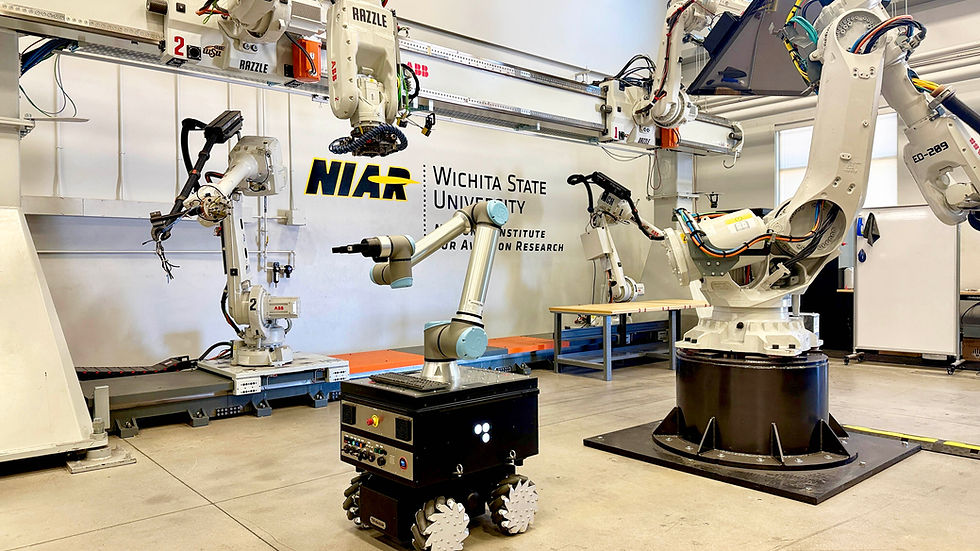
Most everyone has seen factories where steel fences and bright yellow scanners set the rules. If a person stepped past a line, the robot stopped. Production stopped too. We accepted that tradeoff because safety matters. Then labor got tight, costs went up, and a lot of work left the United States. The common belief was simple: if you want to build here, you have to give up speed or spend a fortune rebuilding cells.
Introducing SR-1: A Game Changer
SR-1 breaks that thinking. Picture a standard robot cell on your floor. No redesign. No new robot. You mount SR-1. It creates a live 3D picture of the space and knows the difference between a person and everything else. When a person gets too close, the robot slows or pauses. When the space clears, the robot returns to work. People stay safe. The cell keeps producing.
That is the heart of SR-1: safety first, productivity always. Now think about what that means for you.
KEY BENEFITS OF SR-1
Retrofitting Existing Cells: You can retrofit existing cells, so you use the assets you already own.
Reclaiming Floor Space: You remove fences in many applications, so you reclaim floor space.
Increasing Throughput: You reduce unplanned stops, so throughput rises without hiring a dozen more operators.
Improving Uptime: You make the cell easier to maintain, so uptime improves.
Enhancing Compliance: You give safety teams real data, so compliance conversations get faster.
SR-1 changes the daily rhythm on the floor. Operators approach a cell with confidence. Maintenance can access the robot without a maze of gates. Supervisors see fewer blocked aisles and more flexible layouts. Finance sees higher output per square foot. HR sees safer jobs that are easier to staff.
A SHIFT IN ACTION
Here is how it plays out over a shift:
First Hour: Setup clears faster because the cell is open and accessible.
Mid-Morning: An associate steps in to clear a part. SR-1 detects the person, signals a safe slow or stop, the part is cleared, and the robot resumes. No drama, no lockouts, no waiting for someone with a key.
After Lunch: A changeover that used to require opening fences now happens in minutes.
End of Day: You shipped more with the same team and the same robots.
COMPLIANCE AND SAFETY
What about compliance and audits? SR-1 was built to meet functional safety requirements for industrial robots. Our design has already achieved PLd Category 3 design sign-off by UL. For you, that means a safety case you can defend and a path to scale across sites. Add SR-Insight, and you get a live dashboard of stops, slows, intrusions, and obstruction events tied to each cell. This turns safety from a cost center into measurable performance.
CONNECTING TO ONSHORING STRATEGY
Let’s connect this to your onshoring strategy:
Compete on Total Cost: Compete on total cost, not just labor. Higher throughput, less floor space, fewer stoppages.
Shorten Time to Value: Retrofit beats rip and replace, so you see ROI faster.
Build Resilient Lines: With safer human and robot interaction, you can mix manual and automated tasks without walling off half the plant.
Hire and Keep Talent: Safer, clearer workflows make these jobs better jobs.
WHAT THIS TECHNOLOGY MEANS FOR YOUR COMPANY
What does it mean for your company to use this technology?
For Operations: Cells become flexible assets. You move them, re-task them, and still protect people.
For EHS: You gain defensible safety architecture plus event data you can act on.
For Finance: You convert safety from a productivity penalty into a productivity multiplier.
For Customers: You hit dates with fewer excuses. Safer lines miss fewer beats.
SR-1 does not ask you to believe in a future factory that arrives someday. It upgrades the one you run right now. It lets you keep your robots, protect your people, and build here at home with confidence. Safer production, higher output, and a practical path to bring work back to the United States or make the lines you already run here more competitive.
And that’s SR-1.
CONCLUSION
In conclusion, SR-1 is not just a product; it’s a solution. It redefines the possibilities of industrial automation. With SR-1, we can enhance safety, increase productivity, and make manufacturing smarter. Why settle for less when you can have a system that works for you today?
Let’s embrace the future of manufacturing together.


Comments